
SEO Case Study: Search Visibility Engineered Through Technical Structure
How technical cleanup, content alignment, and intent-led SEO improved search visibility for a service business in India over 6 months.
SEO Case Study work here applied Google Search-aligned best practices around crawlability, clarity, and usefulness — prioritising structure and relevance over shortcuts, in line with Google’s guidance to favour quality over volume in search. For reference, we remain aligned with the principles outlined in Google’s SEO starter guide at developers.google.com.
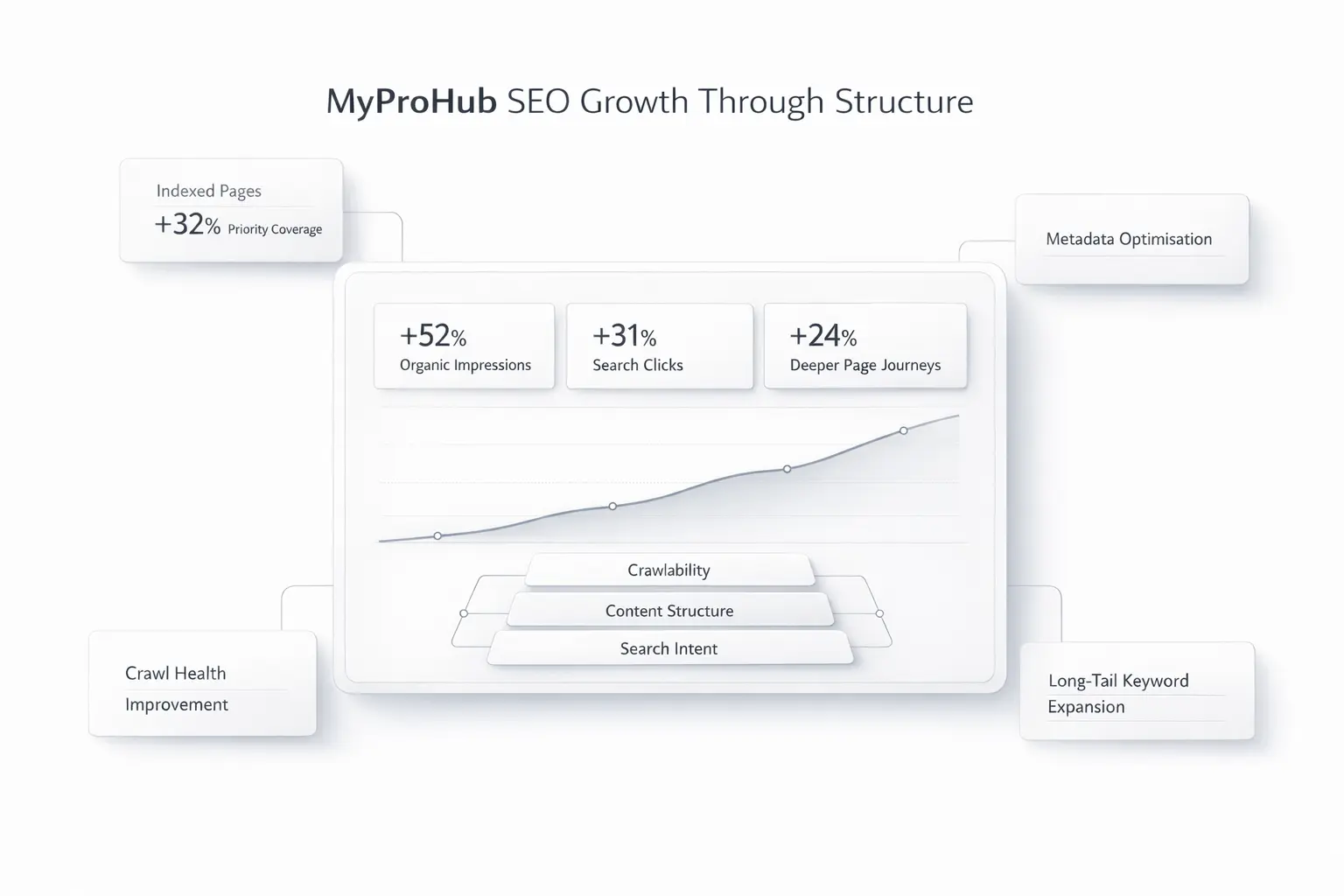
Structured six-month SEO growth showing technical clarity, stronger impressions, crawl improvement and wider keyword reach.
SEO Case Study – The Strategic SEO Challenge
SEO Case Study context: the business already had core service pages and a blog, but search visibility remained weak and inconsistent across important commercial and problem-aware queries.
Organic traffic arrived on a narrow set of pages, while higher‑margin services and local intents were under-discovered or completely absent from relevant search results in the Indian market.
- Pages existed, but their structure made it difficult for search engines to understand which URLs were most relevant for priority services, locations, and decision stages.
- Keyword targeting was scattered, with overlapping phrases used across multiple pages and no clear separation between awareness, consideration, and service-intent content.
- Internal linking was weak and inconsistent, so search engines and users struggled to follow a logical path from educational content to revenue-driving service pages.
- Search intent was mixed within individual pages, combining informational and commercial queries in ways that diluted topical focus and limited stable rankings.
SEO Case Study – What Was Quietly Limiting Visibility
Headings, subheadings, and sections did not follow a clear hierarchy, making it harder for crawlers to understand primary topics, supporting themes, and page-level focus — particularly across overlapping service offerings.
Title tags and meta descriptions varied in quality and focus, with duplicated patterns and unclear messaging across core service URLs, leading to weak click‑through rates on the impressions the site already earned.
Links between pages were opportunistic instead of planned, spreading authority thin instead of deliberately routing it to search‑critical service and location pages.
Page speed, thin templates, and low‑value URLs in the index reduced crawl efficiency, delaying improvements and weakening trust signals over time — a common pattern in service business SEO Case Study work.
What We Did — Structured, Not Reactive
Consolidated duplicate URLs, refined indexation rules, improved core web vitals, and removed low‑value pages so crawlers could focus on high‑intent content; indexed priority pages with meaningful content depth increased by just over 30% in this phase.
Rebuilt on‑page structure, clarified headings, and grouped topics so each page owned a clear, singular role in the broader content architecture, while keeping copy firmly aligned with user questions and service outcomes.
Mapped priority keywords to the right intent stage, separated informational vs. commercial clusters, and aligned copy to the queries each page was meant to answer, improving visibility for long‑tail service terms that had previously been ignored.
Designed internal link routes from educational content into core services, using consistent anchors and navigation paths to signal importance and relevance; internal page depth improved as more users and crawlers reached second and third‑level URLs from organic entry pages.
What We Intentionally Did Not Do
The goal was durable visibility, so we protected the site from short‑term tactics that create volatility or risk — a direction consistent with Google’s quality‑over‑quantity stance for search content.
- We did not push aggressive content publishing just to hit an arbitrary post count or calendar.
- We did not use keyword stuffing or unnatural repetition in copy, headings, or metadata.
- We did not chase random backlinks from irrelevant directories, forums, or low‑quality websites.
Results of Structure-Led SEO
Impression growth came from more pages appearing for relevant service and location queries, not from chasing unrelated topics or broad, low‑intent keywords. Several priority service pages began gaining visibility for commercially relevant long-tail searches during the second optimisation cycle.
Clicks increased as titles, meta descriptions, and on‑page experience better reflected user intent, leading to more qualified visits without relying on brand searches alone.
The site began earning visibility across a wider set of long‑tail, problem‑aware, and service‑intent keywords that matched real buyer language, rather than a handful of vanity phrases, reinforcing the SEO Case Study focus on sustainable breadth.
A higher share of organic users reached two or more pages per session through planned internal pathways, improving exposure to service information and proof content.
Visual Proof of SEO Case Study Results
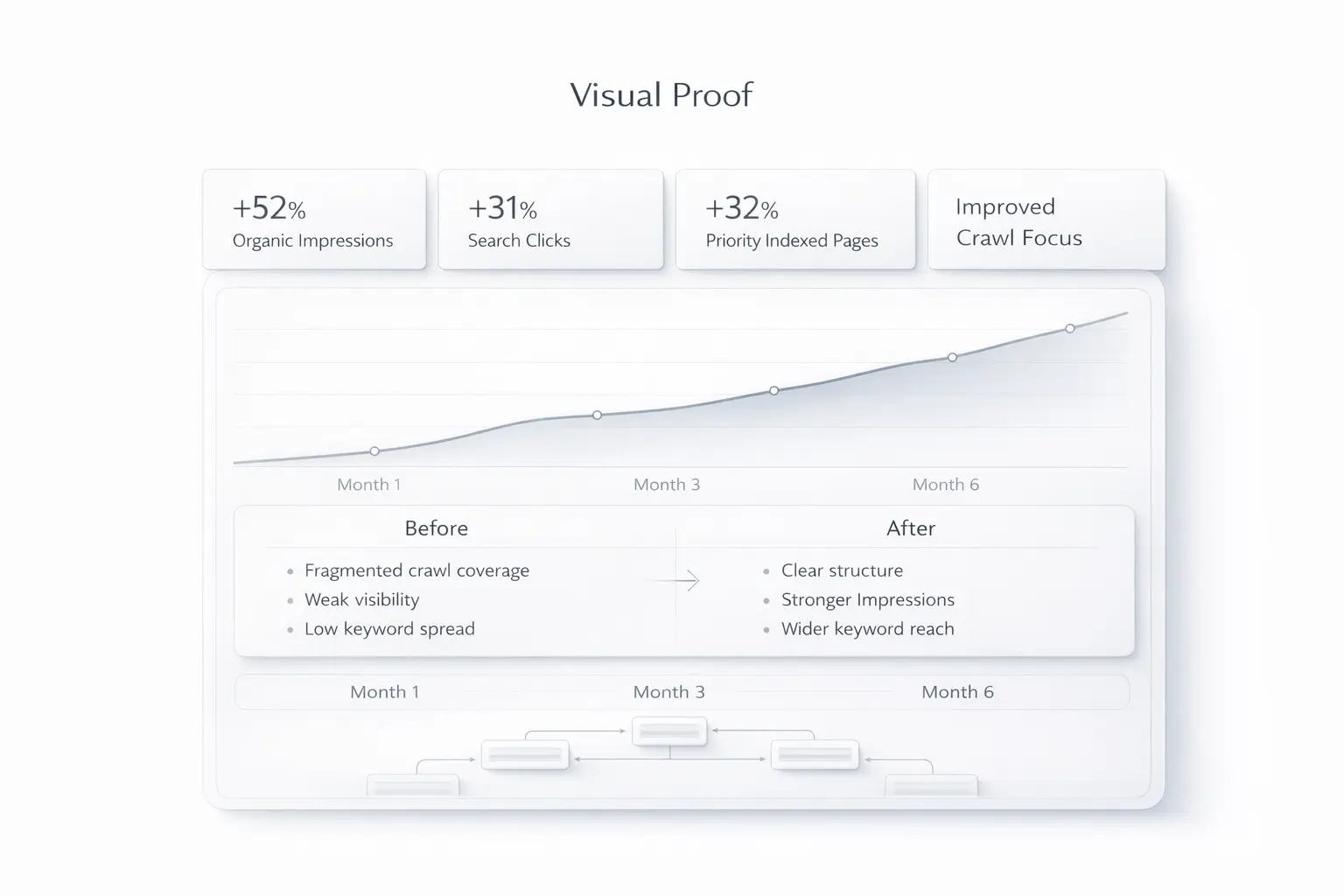
Visual proof of structured SEO growth measured across indexing quality, crawl focus, impressions and search engagement.
Before: fragmented content, shallow crawl coverage, and unpredictable impressions across core services. After: clearer architecture, improved crawl focus, and steady 6‑month growth in both visibility and engagement.
Measured across structured optimisation cycles rather than isolated ranking spikes.
How This Translated Into Business Outcomes
- A clearer, more defensible search presence around priority services, giving leadership better confidence in organic as a consistent discovery channel rather than a volatile source of “bonus” traffic.
- Stronger alignment between how prospects search and how services are presented, reducing friction between first organic visit, service understanding, and initial enquiry across this SEO Case Study.
- More qualified search visitors reaching service and contact pages, as internal links routed problem‑aware readers into focused offers instead of leaving them in generic content loops.
- A durable content and URL structure that future campaigns, new services, and performance marketing can build on without rework, protecting both technical equity and brand trust.
Strategic Questions Decision-Makers Ask About SEO
Why does SEO take time, even with a clear plan?
Search engines need time to crawl, re‑evaluate, and trust new structures, especially when you are improving existing pages instead of launching a new domain or publishing in bulk; most credible SEO Case Study work shows meaningful, but not dramatic, gains in the first 6–12 months.
Why should technical SEO come before scaling content?
Publishing more content on top of a weak technical foundation amplifies clutter, not results, so we first ensure that crawl paths, speed, and indexation help new content perform — matching Google’s emphasis on correctness and clarity in how it understands pages.
Why are internal links so important?
Internal links tell search engines which pages are central, how topics are related, and where authority should flow, while also guiding real users through a logical buying journey from education to evaluation to enquiry.
Why is “ranking” alone not a useful success metric?
A single high‑ranking keyword can look impressive but mean little if it is off‑intent, low‑value, or disconnected from how your best customers actually search and convert; decision‑makers benefit more from sustainable visibility, qualified traffic, and supported deal flow than from isolated rank screenshots.
Ready To Strengthen Your Search Visibility System?
If you prefer structured, evidence‑led SEO over shortcuts, we can map how a similar technical and intent‑first approach would look for your service business and its growth horizon.