

Why Good Ads Fail Without Tracking
Many campaigns fail even when the creative is strong because the measurement layer is weak. If you want reliable growth, you need conversion tracking for ads, not just clicks.
Ads amplify reality. Tracking reveals reality. Good ads generate movement. Tracking determines growth.
Measurement is the real growth engine
Business owners often assume an ad failed because the audience was weak or the creative was wrong. In reality, the campaign may have produced interest, but the tracking layer never captured the full journey.
That is why businesses often see why ads fail after clicks even when traffic is healthy. Without the right event hierarchy, landing page behaviour tracking, lead tracking, WhatsApp tracking, and purchase signal quality, the platform cannot learn what a real conversion looks like.
1. Why Good Ads Fail Without Tracking
A good ad can create attention, curiosity, and even traffic, but it still fails as a growth asset if the system cannot measure what happens next. This is where many brands lose money while believing the campaign itself is the problem.
The core issue is simple: pixel installed does not mean complete tracking. A tag on the site is only one part of the system. Real performance depends on event design, conversion validation, and attribution quality across the full funnel.
For brands searching for why good ads fail without tracking, the answer is usually not the creative. It is the missing bridge between ad engagement and actual business outcomes.
2. Why Clicks Alone Mislead Businesses
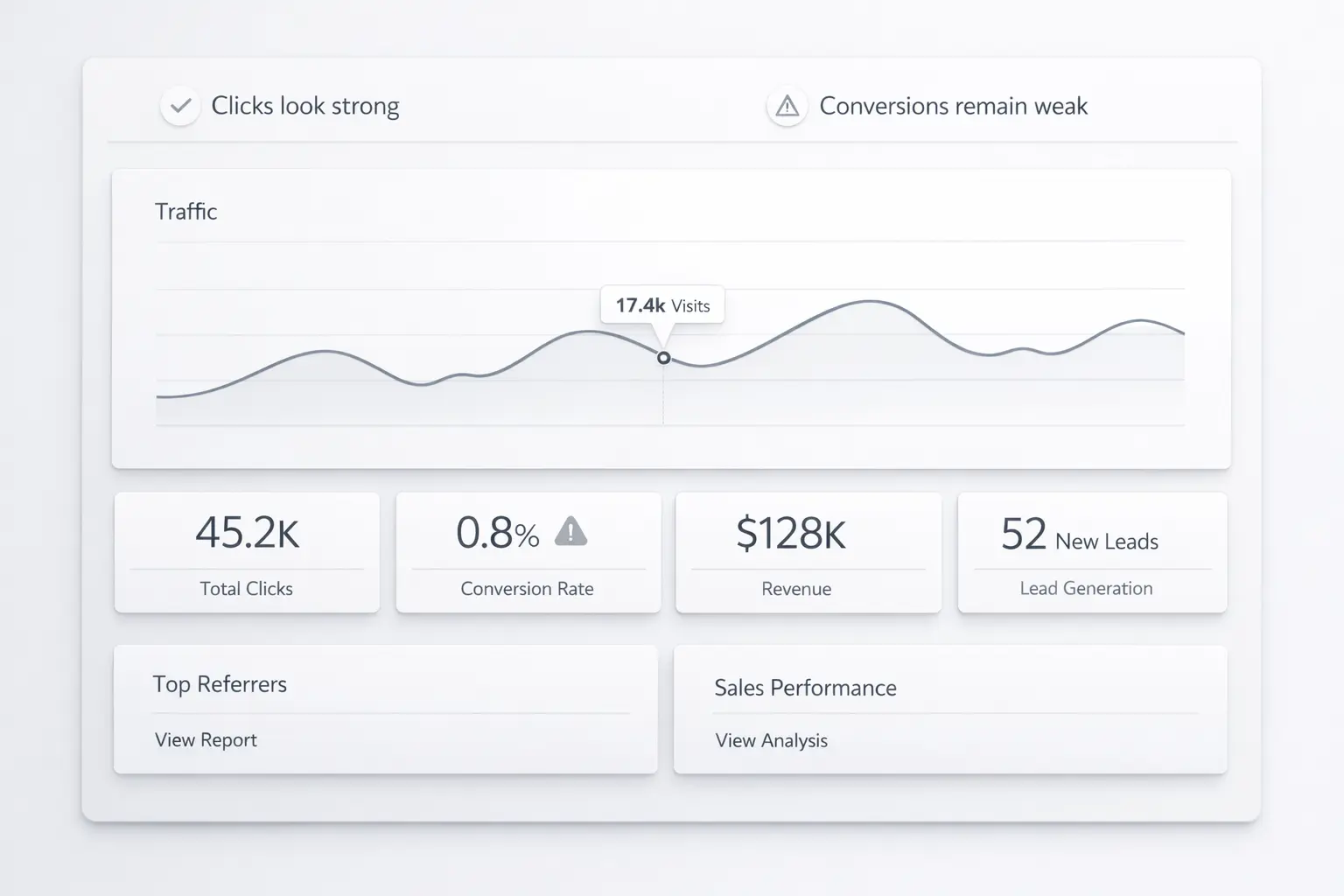
Clicks can make a campaign look healthy while revenue stays flat. That is because clicks measure interest, not intent completion.
A user may click, scroll, hesitate, message on WhatsApp, open multiple tabs, or abandon the page. If your tracking only sees the click, you never learn which micro-actions led to the sale or the lead.
3. Pixel Installed But Tracking Still Broken
One of the most common facebook pixel tracking issues is assuming installation equals accuracy. In reality, the pixel may load while events fire incorrectly, duplicate, or fail to pass meaningful parameters.
Common failures include event mismatch, missing purchase values, broken thank-you pages, redundant triggers, cookie restrictions, and deduplication problems between browser and server events. This is why the tracking setup must be tested, not assumed.
Good tracking requires more than presence. It requires signal integrity.
4. Meta Ads Without Event Clarity
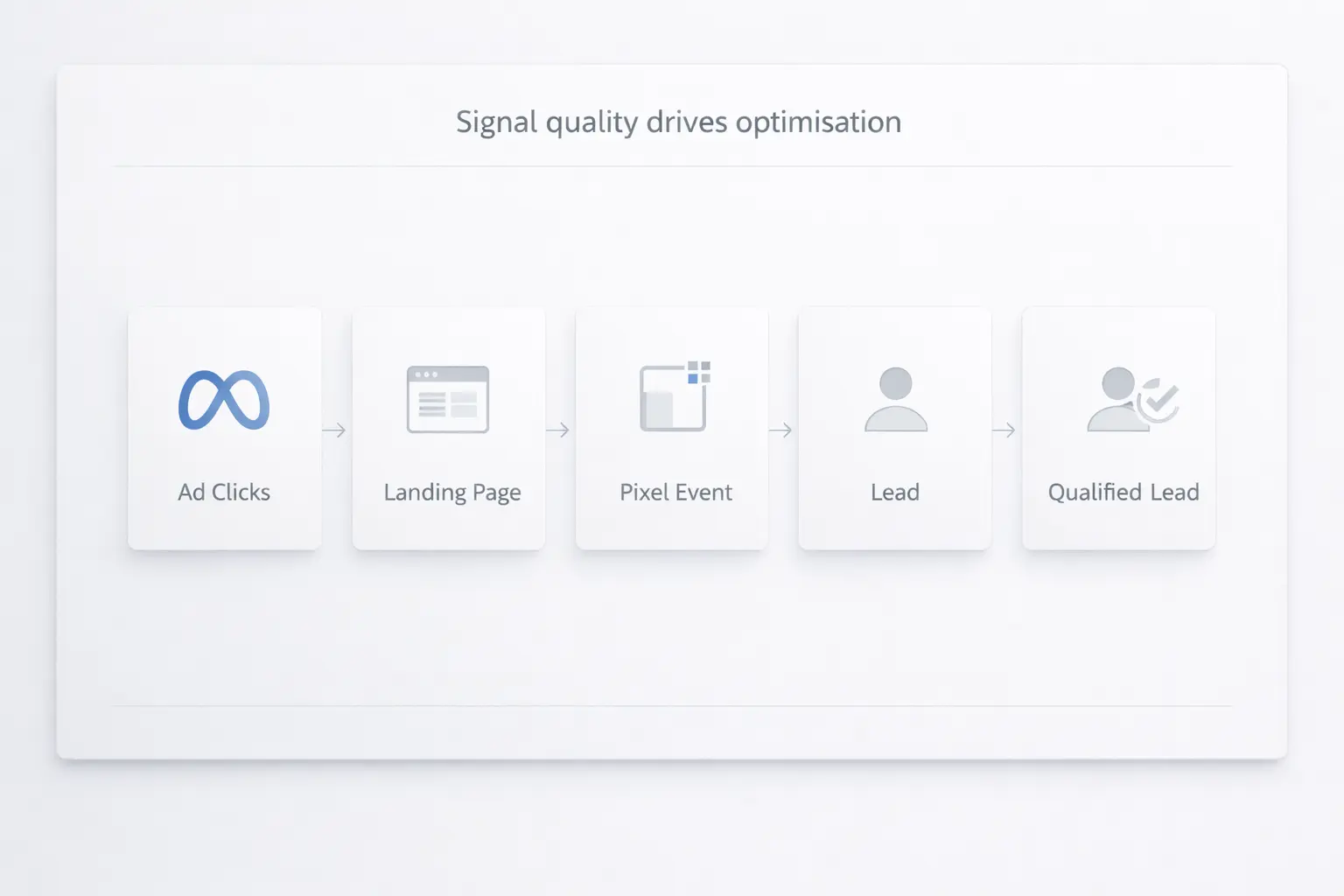
Meta can only optimize well when it receives clear conversion signals. That means your meta ads tracking setup must distinguish between view content, lead, initiate checkout, add to cart, contact, and purchase events in a logical hierarchy.
Event hierarchy matters because platform learning depends on the quality of the strongest action you can reliably measure. If a business optimizes only for shallow events, Meta may find cheap engagement instead of real buyers.
For lead generation businesses, WhatsApp tracking and form tracking should be tied to business outcomes, not just button clicks. If the system cannot identify which conversations became qualified leads, the algorithm learns too little.
Official reference: Meta’s conversion tracking documentation explains using the Meta Pixel for website actions and the Conversions API for additional event coverage and reliability. Meta Business Help and Meta Pixel documentation.
5. Google Ads Without Conversion Accuracy
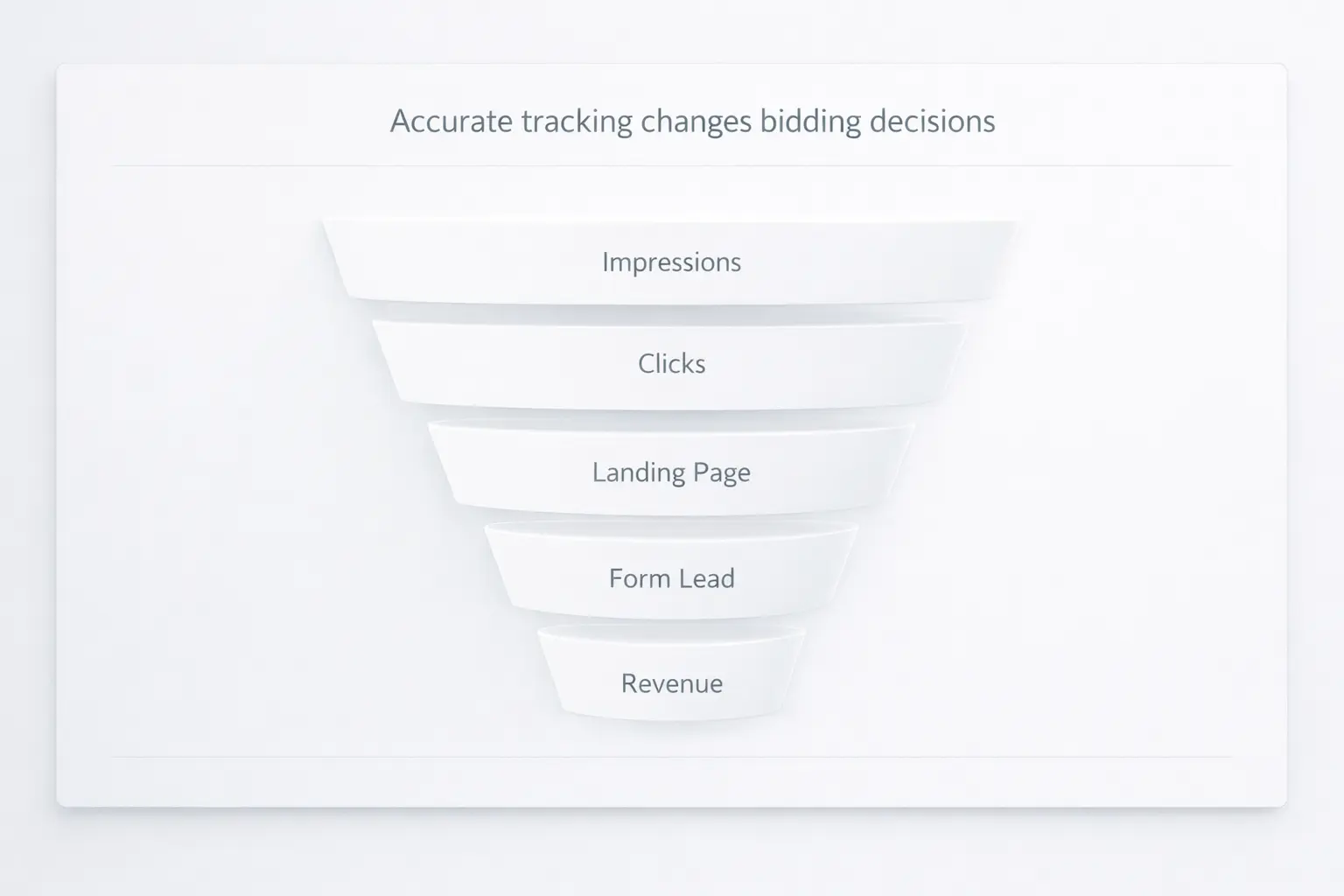
Google ads tracking setup is only effective when conversion actions are measured with precision. If leads are counted twice, purchases are missed, or the wrong form submission is recorded as a conversion, campaign decisions become distorted.
This creates google ads conversion tracking problems that look like poor performance but are actually measurement errors. When the platform receives the wrong signals, bidding, budget allocation, and search term expansion all become less reliable.
Accurate conversion tracking gives Google the signal it needs to understand which keywords, audiences, and landing pages are producing business value.
Official reference: Google Ads Help explains conversion measurement through selecting the data source, creating conversion actions, and finishing setup. See Google Ads Help and About conversion measurement.
6. Why Businesses Scale Wrong Without Data
Businesses often scale the wrong ad because they confuse activity with contribution. A campaign may generate many clicks, messages, or page visits, yet still fail to create profit if attribution gaps hide the real winner.
Without an ad tracking system for business growth, you may increase spend on the wrong audience, optimize for the wrong event, or cut a campaign that was actually creating high-value outcomes off-platform.
This is especially common for service businesses and schools where the actual sale happens after a call, consultation, or WhatsApp conversation. The platform needs the full chain, not the shortcut.
7. Tracking Before Scaling
Before increasing budget, validate the entire conversion path. Check whether the pixel fires, whether events are deduplicated, whether landing page behaviour tracking records key actions, and whether lead quality is aligned with business reality.
Good scaling happens after measurement confidence, not before it. When the system can connect ad click, on-site action, and downstream revenue, scaling becomes a controlled decision rather than a gamble.
That is the difference between spending more and growing better.
8. Real Example of Lost Budget Without Attribution
A service business runs Meta ads and receives 240 clicks, 38 WhatsApp conversations, and 14 form leads. The dashboard shows low reported conversions, so the owner believes the campaign is weak.
After audit, it turns out the pixel fired only on page loads, the WhatsApp button was not tracked as a meaningful event, and lead forms were recorded without source parameters. The campaign was driving demand, but the attribution system was blind.
Once the tracking was corrected, the business discovered that one audience segment was producing qualified leads at a far lower cost than expected. The budget loss was not caused by the ad. It was caused by hidden data loss.
9. Expert Audit Framework Before Increasing Budget
Use a simple audit sequence before scaling any account. Start with pixel and tag presence, then validate event hierarchy, then test lead tracking and purchase signal quality, and finally compare platform-reported conversions with CRM or backend results.
For Meta, confirm the meta ads tracking setup includes browser and server coverage where needed. For Google, confirm the google ads tracking setup records the correct action, counts it properly, and assigns value accurately.
- Check whether primary conversion events fire only once.
- Verify WhatsApp, form, call, and checkout actions separately.
- Inspect landing page behaviour tracking for scrolls, clicks, and exits.
- Match reported leads or purchases against CRM or order data.
- Review attribution gaps across device, browser, and cookie loss.
Ready to Build Ads That Learn Properly?
At MyProHub, we build ad systems with tracking, optimisation logic, and growth structure.
10. FAQ
Why do ads fail even when creatives look good?
Because creative only creates attention. If tracking does not capture the post-click journey, the platform cannot optimize for the right outcome and the business cannot see true performance.
Is pixel enough for Meta Ads?
No. Pixel installed is not complete tracking. You also need clean event hierarchy, deduplication, quality parameters, and often server-side support through the Conversions API for better reliability.
Why is conversion tracking important in Google Ads?
It tells Google which clicks actually create business value. Without it, bidding, keyword selection, and budget allocation can be optimized around the wrong signals.
Can ads work without tracking?
They can generate clicks and attention, but growth becomes guesswork. Without tracking, it is difficult to know what deserves more budget, what should be fixed, and what is actually producing revenue.
Internal growth reading
If you want a broader growth system around this topic, explore Digital Growth Partner, Meta Ads Case Study, Meta Ads Cost in India 2026, and Why Shopify Ads Fail.
These pages complement the same principle: the stronger the tracking architecture, the more intelligently your ad spend can scale.