

Why Google Ads Fail Even With Good Budget
Many advertisers assume that more spend automatically means more leads, more sales, and faster growth. In reality, why google ads fail even with good budget is usually a strategy problem, not a money problem. Google Ads buys visibility. Tracking buys intelligence. Budget without structure becomes expensive noise.
Why google ads fail even with good budget becomes obvious when search intent, tracking quality, and landing page relevance are misaligned. When campaigns are built without search intent discipline, negative keyword control, conversion tracking clarity, and landing page alignment, clicks create activity while data creates scale.
1. Why Google Ads Fail Even With Good Budget
Good budget can still underperform when the campaign architecture is weak. The most common reason behind google ads budget waste reasons is not a low daily cap, but a broken chain between keyword intent, ad promise, landing page experience, and conversion tracking.
Google Ads is a learning system. If you feed it the wrong signals, it will optimize toward the wrong outcomes. A campaign can spend aggressively and still fail because the account is collecting traffic instead of qualified demand.
That is why google ads campaign optimisation must start before scaling. Structure first. Spend second. Businesses often misunderstand why google ads fail even with good budget because clicks create activity before conversion quality is understood.
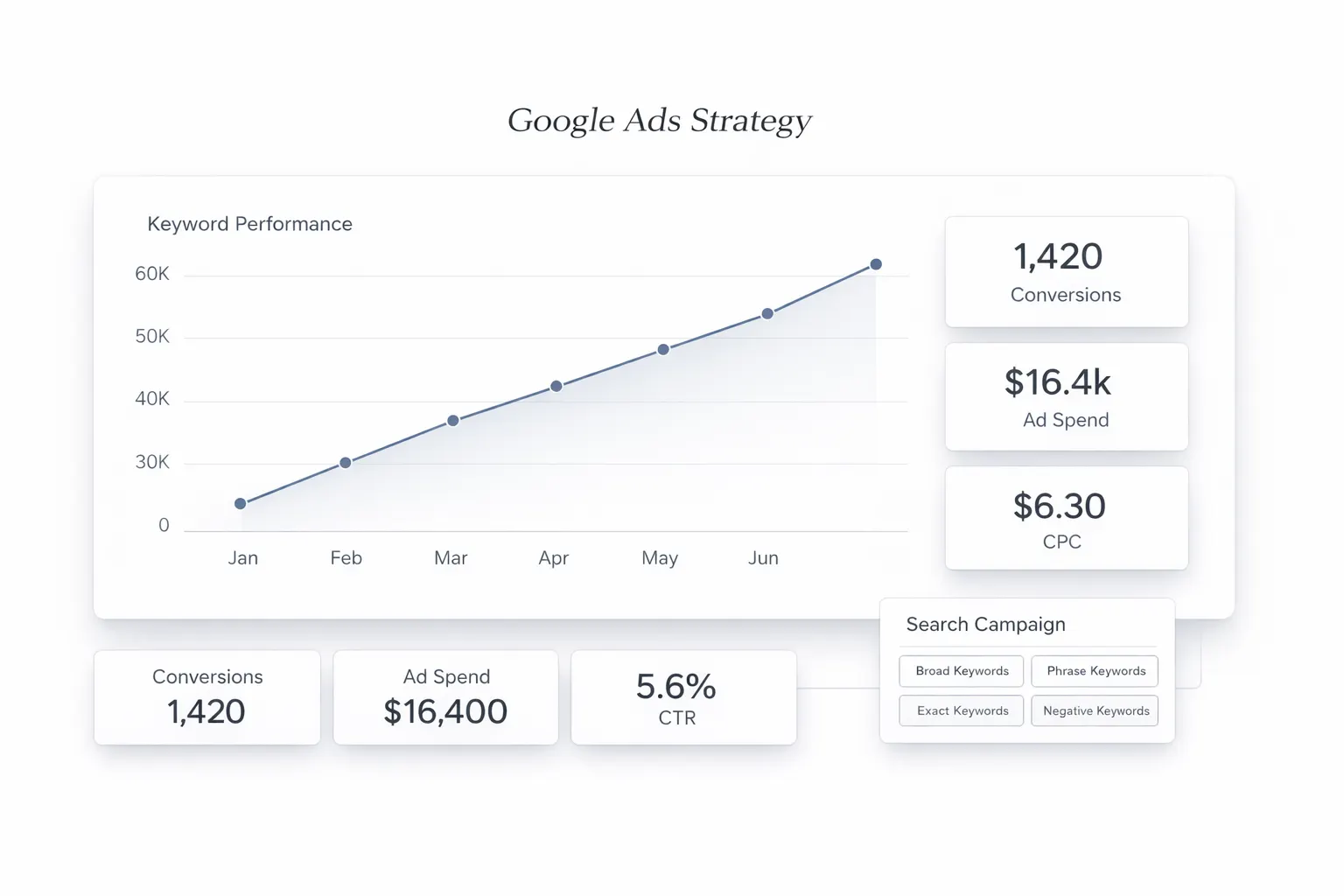
2. Why Clicks Do Not Equal Business Results
One of the biggest mistakes in google ads lead generation problems is celebrating clicks instead of evaluating business outcomes. A click only proves attention. It does not prove intent, trust, readiness, or purchasing power.
Search traffic can be misleading because users click for many reasons: curiosity, comparison, price checking, accidental taps, or information gathering. This is why why google ads fail after clicks is such an important question. The ad may have won the click, but the page, offer, form, or sales process may have lost the user immediately afterward.
Business owners often treat traffic volume as success. Premium performance management treats post-click behavior as the real evidence of demand.
3. Wrong Keyword Intent Destroys Budget
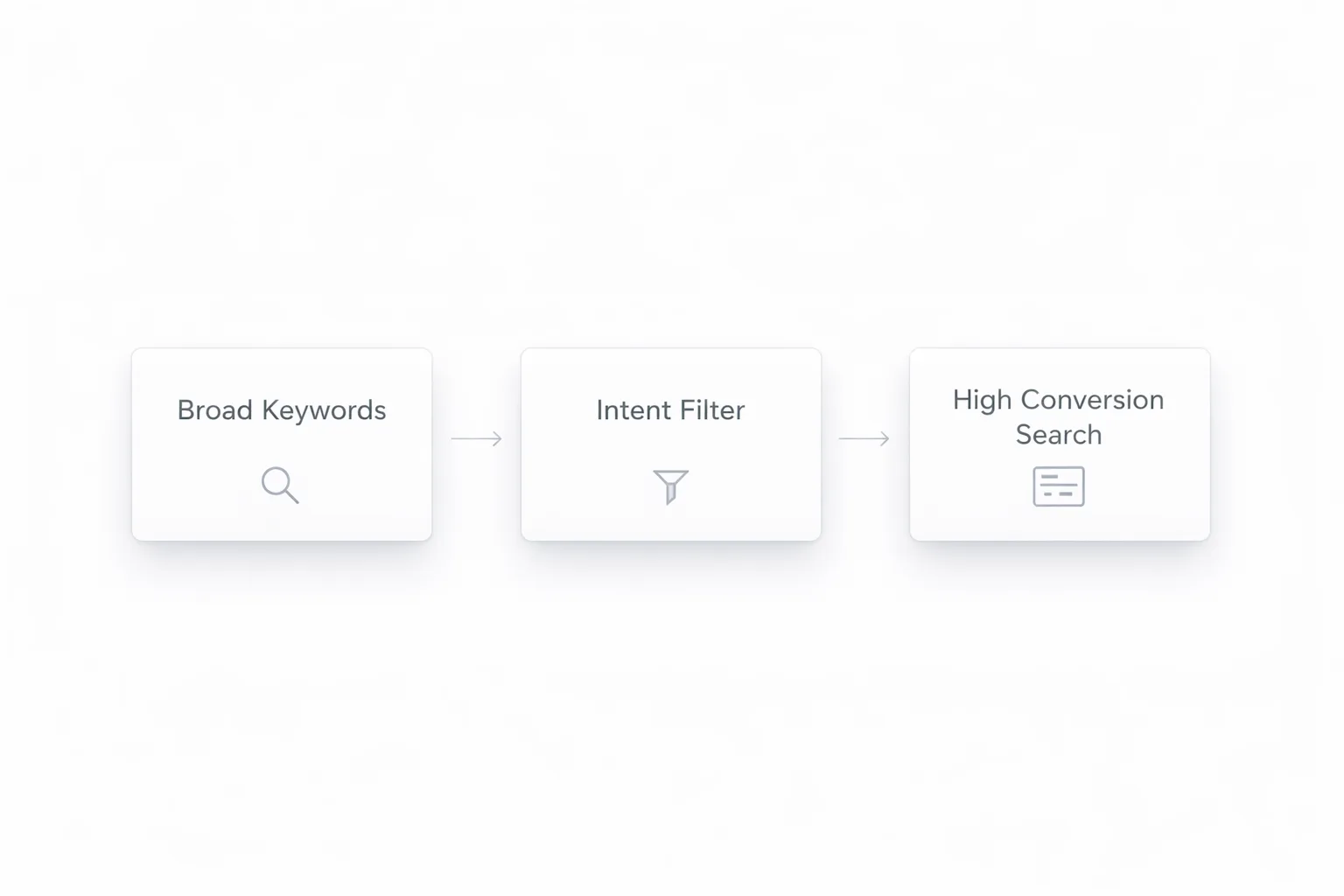
The fastest way to waste budget is to target search terms that do not match commercial intent. Broad keywords can be useful, but only when they are controlled by clear audience logic, negative keyword architecture, and conversion feedback.
When a user searches with research intent while your campaign expects buying intent, the mismatch creates poor CTR, weak engagement, and low conversion rates. That is a classic google ads conversion issues pattern: the account is buying traffic from the wrong stage of the funnel.
Search intent mismatch
Search intent mismatch happens when the keyword describes one need, but the user actually wants something else. For example, a lead generation company may target broad terms like “marketing agency” when the real buyer intent is “performance marketing agency for schools” or “Google Ads agency for ecommerce.”
Negative keywords
Negative keywords protect budget by excluding irrelevant searches. They prevent ads from appearing for unrelated search terms and help focus spend only on high-intent queries that matter to your business.
To reduce google ads budget waste reasons, search term audits should happen continuously. The goal is not just traffic control. The goal is intent filtration.
4. Google Ads Tracking Installed But Still Incomplete
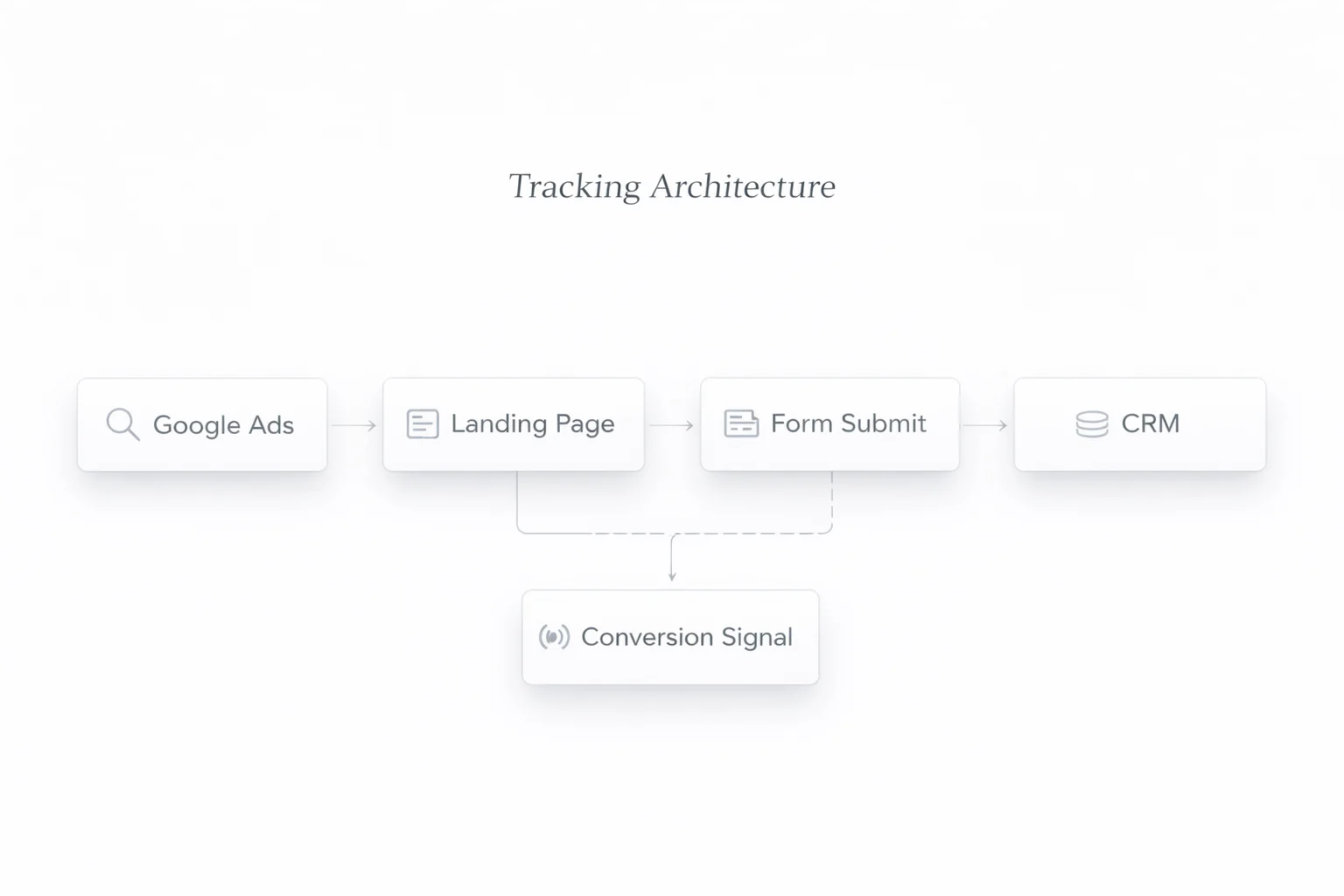
Many accounts have google ads conversion tracking setup in place, but the setup still fails strategically. A tag can fire and yet remain incomplete if it tracks the wrong action, misses offline quality signals, duplicates conversions, or cannot reliably attribute the source of the lead.
Google Ads conversion tracking helps identify which clicks produce meaningful business actions such as calls, form submissions, purchases, or qualified leads. Without accurate measurement, campaign optimisation becomes weak. You can learn more in the official Google Ads documentation and the Google conversion tracking guide.
Common tracking gaps
- Form submit tracked, but qualified lead not separated from junk lead.
- Phone calls counted, but call quality not assessed.
- Thank-you page tracked, but form errors and duplicate submissions ignored.
- Cross-device or cross-channel attribution gaps distort true contribution.
google ads tracking for business growth only works when the measurement plan connects ad clicks to actual commercial milestones. If tracking is weak, the bidding system learns from noise instead of value.
5. Conversion Signals and Campaign Learning
Google Ads optimisation depends on signal quality. The platform needs enough reliable conversion data to understand which searches, audiences, devices, locations, and times are worth more. Attribution models help businesses understand how multiple ad interactions contribute to conversions across the customer journey, improving bidding decisions and optimisation accuracy.
If conversion signals are too few, too vague, or too noisy, the campaign stays stuck in guesswork. That is why the learning phase matters. When budgets jump too quickly, targets change too often, or conversion definitions are unstable, the system can reset and lose useful progress.
Why signal quality matters
Better signals improve bidding logic, audience refinement, and query selection. Weak signals create false confidence, because the dashboard may show spend and clicks while the campaign actually learns nothing useful.
6. Landing Page Mismatch Kills Performance
A strong ad cannot save a weak landing page. If the headline, promise, proof, and call-to-action do not match the keyword intent, conversion rates drop immediately. Relevance is the bridge between interest and action.
Landing page performance depends on relevance, clarity, trust signals, and ease of action. If the message after the click does not match the search intent, conversion rates usually fall.
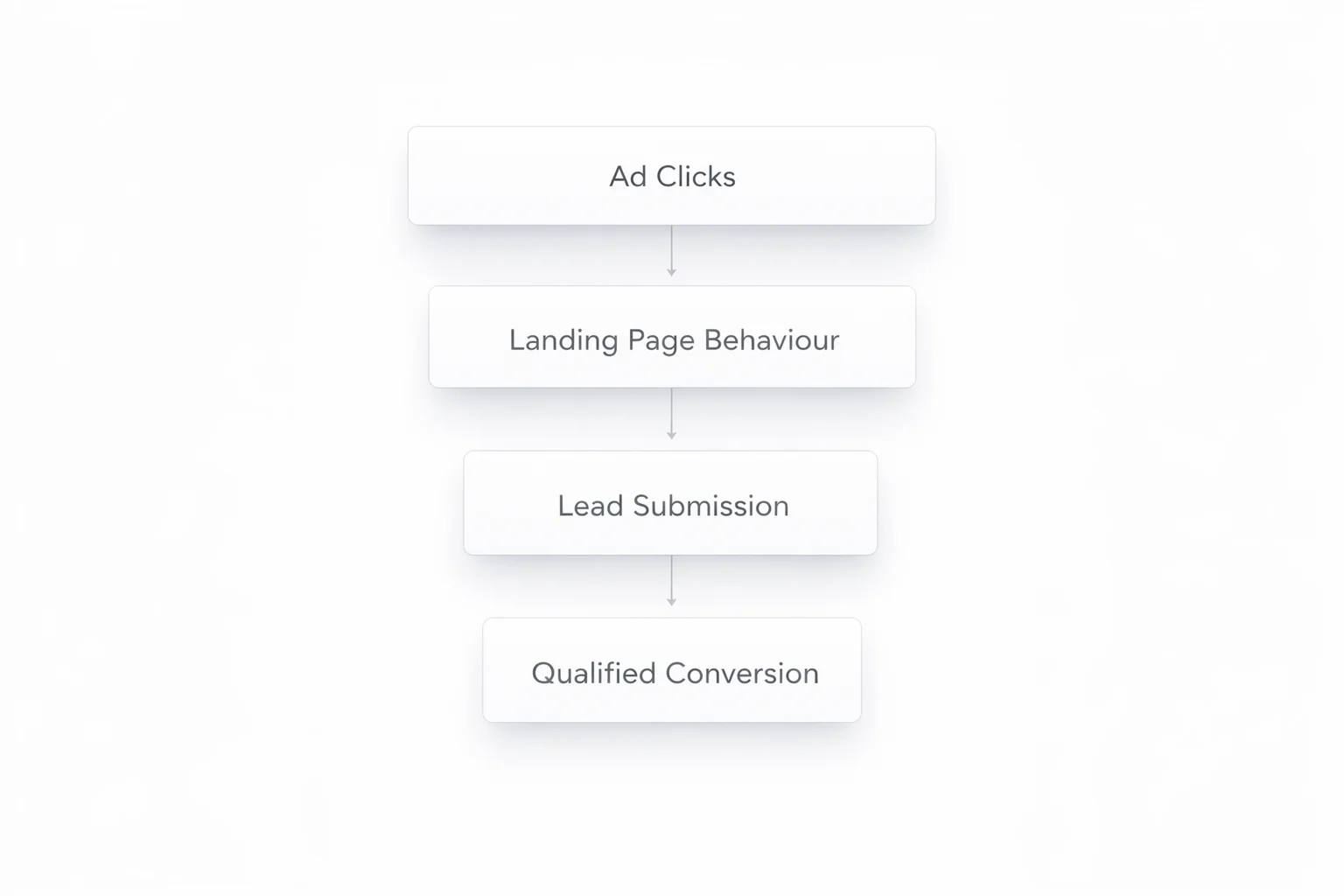
Landing page behaviour tracking is also essential. You need to know where people stop reading, what they ignore, which sections they scroll past, and where friction begins. Without that, optimisation becomes opinion-based instead of evidence-based.
What breaks the page
Generic headlines, unclear value proposition, slow loading, weak trust proof, cluttered layouts, and forms that ask for too much too early.
What improves conversion
Message match, one clear goal, concise copy, proof blocks, simplified forms, mobile-first layout, and a direct CTA that feels confident and specific.
7. Why Businesses Scale Too Early
Businesses often increase budgets before the account has a stable optimisation foundation. That is risky because higher spend amplifies the same weaknesses. If a campaign already has poor intent control or inaccurate conversion data, scaling simply makes the waste larger.
This is where bidding logic problems become expensive. Smart bidding needs high-quality inputs. If the conversion action is weak or the lead quality is unverified, the algorithm may optimize toward cheap leads, not good leads. In other words, the system can become efficient at producing the wrong outcome.
Before scaling, confirm that the campaign has enough conversion volume, stable tracking, accurate attribution, and strong landing page behaviour. Otherwise, the budget becomes a magnifier for inefficiency. The real reason why google ads fail even with good budget is that spend often increases before systems become intelligent.
8. Real Example of Budget Loss in Google Ads
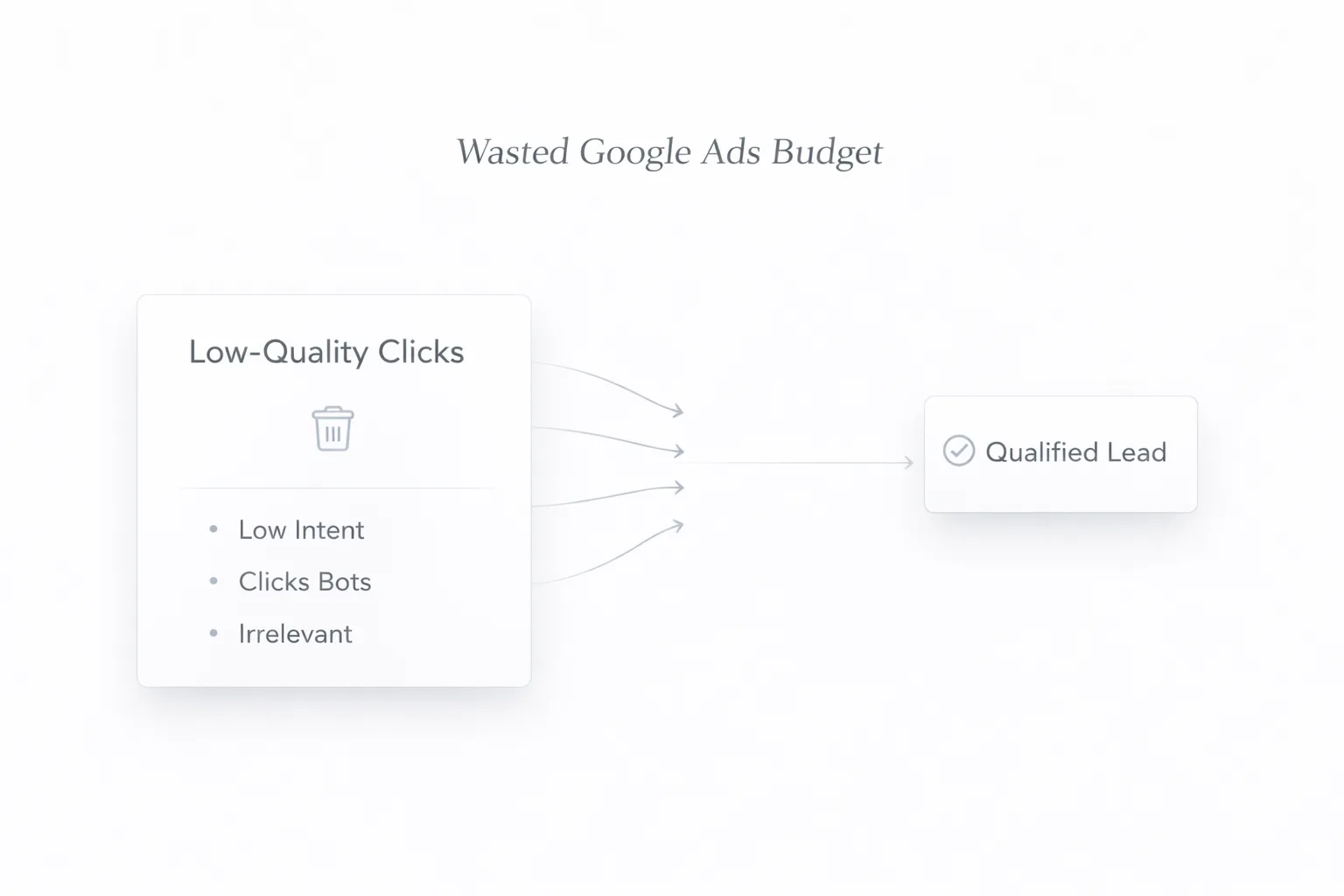
Imagine a service business spending a healthy monthly budget on generic search terms like “digital marketing services” and “ads agency.” The CTR is decent, so the team believes performance is healthy. But the search term report reveals students, job seekers, competitors, and low-intent researchers entering the funnel.
The landing page is a generic homepage. The form is long. The tracking counts every submit as a lead, including spam and unqualified inquiries. After two months, the account reports many leads but almost no revenue. This is a classic example of google ads lead generation problems created by broad keyword waste, poor negative keyword coverage, and incomplete conversion interpretation.
Once the team fixes intent, adds negative keywords, separates qualified conversions, and improves the landing page message match, the same budget starts producing fewer but better leads. That is the real shift from spending to scaling and a clear illustration of why google ads fail even with good budget when strategy is weak.
9. Expert Audit Framework Before Increasing Budget
Before increasing spend, use a structured audit. Premium google ads campaign optimisation is not a collection of random tweaks. It is a diagnostic process.
Audit checklist
- Check whether the primary conversion action reflects true business value, not just a surface action.
- Review search terms and remove irrelevant traffic with negative keywords.
- Verify google ads conversion tracking setup for duplicate tags, missing events, and attribution consistency.
- Assess keyword intent and divide research traffic from purchase-ready traffic.
- Compare ad promise with landing page messaging for consistency.
- Measure form quality, call quality, and lead qualification rate.
- Review device, location, hour, and audience performance for signal quality.
- Increase budget only after the campaign shows stable learning and dependable conversion data.
Ready to Build Google Ads That Learn Properly?
At MyProHub, we build ad systems with tracking, optimisation logic, and growth structure.
If you want better lead quality, cleaner attribution, and stronger campaign learning, reach out directly.
WhatsApp: 9828303537
Email: [email protected]
Visit MyProHub • Google Ads in India • Digital Growth Partner
How This Connects to the Wider Growth Stack
Google Ads rarely fails in isolation. The same business that struggles with tracking and intent in search often faces similar issues in paid social, ecommerce, and funnel design. That is why comparing patterns across services, case studies, and platform economics can improve decision-making.
For a broader view, you can also explore Meta Ads Agency in India, Meta Ads Case Study, Meta Ads Cost in India 2026, and Why Shopify Ads Fail. Those pages help show how channel performance, offer design, and measurement quality interact across the full growth system.
FAQ
Why do Google Ads fail even with high budget?
Google Ads fail with a high budget when intent is wrong, tracking is incomplete, landing pages are weak, or the campaign is optimized toward bad signals instead of real business value.
Why is conversion tracking important in Google Ads?
Conversion tracking shows which clicks lead to valuable actions, helping Google optimise bidding and helping businesses understand whether campaigns are producing qualified leads or only traffic.
Can Google Ads work without landing page optimisation?
They can generate clicks, but performance is usually unstable and expensive without landing page optimisation. Relevance, trust, clarity, and speed strongly affect whether users convert after clicking an ad.
Why do clicks not become leads in Google Ads?
Clicks do not become leads when search intent is weak, ad promise and page message do not match, forms are too complex, trust is low, or the user was never truly ready to convert in the first place.
How do negative keywords help reduce waste?
Negative keywords exclude irrelevant search terms so your ads focus on the queries that matter to your customers. They prevent your ads from being triggered by unrelated terms, helping you avoid unqualified traffic.
Ready to Build Google Ads That Learn Properly?
At MyProHub, we build ad systems with tracking, optimisation logic, and growth structure.
For strategic support, contact us on WhatsApp 9828303537 or email [email protected].